
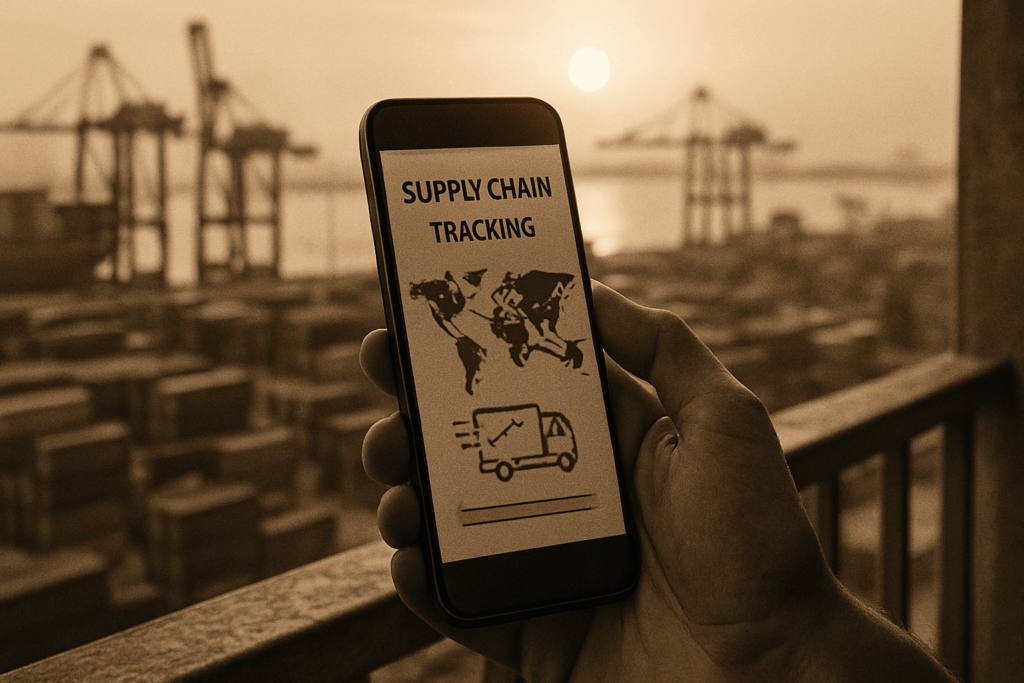
Supply Chain Transparency Gets a Boost
Supply chains used to be black boxes complicated, opaque, and riddled with weak links. Blockchain isn’t making them perfect, but it’s making them visible. With tamper proof records tracing every step from origin to shelf, companies can now prove exactly where their products came from, when they were moved, and whether safety standards were met along the way.
This level of traceability is huge for industries where authenticity and safety matter most. Food producers can show how ingredients moved through cold storage. Pharmaceutical firms can prevent counterfeit drugs from slipping in. Luxury brands can prove a handbag was handcrafted in Milan and not faked in a back alley shop.
Consumers are noticing. Brands that open up their ledgers are building real trust something flashy marketing can’t fake. It’s not just about tech; it’s about accountability. And in 2024, that’s currency.
For a broader look at how blockchain is transforming industries, check out the related reading: blockchain use cases.
Finance Is Moving Beyond Crypto
Blockchain is revolutionizing finance not only through cryptocurrencies but by redefining the way money moves, contracts are enforced, and financial services are delivered.
Cross Border Payments: Faster, Cheaper, and Frictionless
Traditional international payments often come with high fees, long processing times, and multiple intermediaries. Blockchain streamlines this process:
Lower transaction costs compared to traditional banks
Faster settlements, often within seconds or minutes
Minimal third party involvement, reducing delays and risk
These efficiencies are especially impactful for remittances and global business transactions.
Smart Contracts: Automating Financial Services
Smart contracts are self executing contracts with the terms written directly into code. They’re unlocking new efficiencies in several financial areas:
Loans and credit scoring without centralized institutions
Automated insurance claims based on verified events
Trade finance that auto executes when conditions are met, reducing paperwork and fraud
By replacing intermediaries with code, smart contracts reduce both cost and complexity.
DeFi Meets Traditional Finance
Decentralized finance (DeFi) began as an alternative to mainstream finance, but the divide is narrowing.
Banks and fintech firms are exploring integrations with DeFi protocols
Tokenized assets like stocks and bonds are being traded on blockchain platforms
Hybrid models are emerging, where decentralized systems enhance not replace traditional financial infrastructure
The future of finance isn’t fully centralized or decentralized it’s moving toward a more interoperable, transparent model powered by blockchain.
Healthcare Records Without the Hassle
Healthcare has long been buried under paperwork and siloed data systems. Blockchain is cutting through the mess. With decentralized ledgers, patients can control their medical records access them when needed, share them securely, and know exactly who saw what. No more fax machines or re signing paper forms at every new provider.
Institutional sharing is where blockchain starts to show real muscle. Records can move between hospitals, labs, and specialists without risking data leaks. Patients don’t need to give up privacy to get coordinated care. Permissions are trackable. Access is logged. And it all happens in a framework that treats health data like what it is sensitive, critical, and owned by the individual.
In clinical trials, blockchain goes one step further. It lets researchers track participation, dosage, and outcomes in real time. Results are auditable, time stamped, and protected from tampering. This tightens trust in trial results and speeds up drug development without cutting corners. The paperwork isn’t just reduced it’s reimagined.
Real Estate Without Paper Trails
In an industry bogged down by paperwork and middlemen, blockchain is cutting through the mess. Property title transfers, once a slow and error prone process handled across agencies, are being migrated onto tamper resistant digital ledgers. The shift creates a single verifiable record of ownership transparent, time stamped, and immune to manual errors or misfiled deeds.
This overhaul also serves as a line of defense against fraud. Forged signatures and disputed transfers have long plagued real estate markets in both developed and developing regions. With blockchain, authentication is built in. Each transaction creates a new, immutable record that can be reviewed instantly no need to dig through file cabinets or wait on hold with your county clerk.
And then there’s tokenization. Ownership stakes in a property can now be broken into digital tokens, opening the door for fraction based investing. That means you no longer need six figures to tap into real estate returns. With lower barriers to entry, investment becomes more democratic and markets more liquid. The idea isn’t just innovation for its own sake. It’s a reset of how assets are traded, who gets access, and how fast deals can close.
Blockchain won’t bulldoze the housing market overnight. But it is leveling the ground beneath it.
Energy Grids Get Smarter
Energy isn’t just flowing from massive power stations anymore. Peer to peer energy trading is flipping the switch on how we generate and share electricity. With blockchain acting as the behind the scenes ledger, homeowners with solar panels can sell extra energy directly to neighbors no middleman, no blackout level complexity. It’s cleaner, quicker, and a lot more localized.
Smart metering is another piece of the puzzle. Traditional utility billing doesn’t handle micro transactions well, but blockchain does. The tech can track usage in real time and record it immutably, enabling exact payments based on when, where, and how much energy you consume or produce. That changes the game for decentralized power grids, especially in areas where traditional infrastructure is weak or nonexistent.
These systems aren’t just theory. Urban pilot programs are already live in parts of Europe and Australia, letting city residents buy energy from across the street. Meanwhile, off grid villages in Africa and Southeast Asia are running microgrids powered by solar and governed by blockchain. It’s not about someday it’s here, and it’s growing fast.
Governments and Voting See Change
Governments are slowly but steadily testing blockchain to modernize the way public systems operate. At the core: digital identity. More places are experimenting with blockchain based IDs credentials that are secure, verifiable, and harder to fake. For citizens, that could mean fewer headaches when dealing with bureaucracies, and for governments, it means tighter control over accurate data.
Voting systems are next in line. Blockchain backed voting pilots have rolled out in small elections and ballots, and so far, the results point toward greater trust in outcomes. Voter fraud is harder with transparent ledgers, and voting records remain immutable. Still, it’s not all solved. There’s an intense balancing act between security and usability especially when you put a system like voting, which millions depend on, into the wild.
Behind the scenes, research is ongoing. Governments want scalability, privacy, and resilience built into any solution before full rollout. Blockchain isn’t a magic wand but in this space, it’s offering tools that could finally bring 20th century systems into the digital present.
Wrapping It Up
Blockchain didn’t fade with the crypto hype cycle. It matured. Now it’s driving real change in how industries manage data, verify ownership, and build trust without needing middlemen. From supply chains and health records to real estate and energy grids, distributed ledgers are quietly restructuring old systems.
This is more than tech buzz. It’s about embedding transparency directly into the bones of business processes. That means clearer audits, smarter logistics, and systems that don’t rely on blind faith. Trust is no longer just a brand slogan it’s code.
Expect the momentum to keep building in 2024 and beyond. The more pain points blockchain solves in the real world, the harder it is to ignore. For a deeper look at what’s already working, check out these expanding blockchain use cases.
 Ask Walteronie Bassetton how they got into decentralized finance trends and you'll probably get a longer answer than you expected. The short version: Walteronie started doing it, got genuinely hooked, and at some point realized they had accumulated enough hard-won knowledge that it would be a waste not to share it. So they started writing.
What makes Walteronie worth reading is that they skips the obvious stuff. Nobody needs another surface-level take on Decentralized Finance Trends, Investment Strategies for Cryptocurrencies, Expert Opinions. What readers actually want is the nuance — the part that only becomes clear after you've made a few mistakes and figured out why. That's the territory Walteronie operates in. The writing is direct, occasionally blunt, and always built around what's actually true rather than what sounds good in an article. They has little patience for filler, which means they's pieces tend to be denser with real information than the average post on the same subject.
Walteronie doesn't write to impress anyone. They writes because they has things to say that they genuinely thinks people should hear. That motivation — basic as it sounds — produces something noticeably different from content written for clicks or word count. Readers pick up on it. The comments on Walteronie's work tend to reflect that.
Ask Walteronie Bassetton how they got into decentralized finance trends and you'll probably get a longer answer than you expected. The short version: Walteronie started doing it, got genuinely hooked, and at some point realized they had accumulated enough hard-won knowledge that it would be a waste not to share it. So they started writing.
What makes Walteronie worth reading is that they skips the obvious stuff. Nobody needs another surface-level take on Decentralized Finance Trends, Investment Strategies for Cryptocurrencies, Expert Opinions. What readers actually want is the nuance — the part that only becomes clear after you've made a few mistakes and figured out why. That's the territory Walteronie operates in. The writing is direct, occasionally blunt, and always built around what's actually true rather than what sounds good in an article. They has little patience for filler, which means they's pieces tend to be denser with real information than the average post on the same subject.
Walteronie doesn't write to impress anyone. They writes because they has things to say that they genuinely thinks people should hear. That motivation — basic as it sounds — produces something noticeably different from content written for clicks or word count. Readers pick up on it. The comments on Walteronie's work tend to reflect that.