I’ve helped hundreds of new traders set up their first accounts on Binance exchange. And I can tell you the biggest problem isn’t understanding crypto. It’s figuring out how to use the platform without screwing up.
Binance is the largest crypto exchange in the world. That’s great for liquidity and options. But the interface? It can feel like sitting in a cockpit with no flight training.
Most beginners make the same mistakes. They rush through security settings. They pick the wrong order types. They panic when they see all the charts and buttons.
I’ve been trading on Binance for years. I’ve made those mistakes myself (so you don’t have to).
This guide walks you through everything you need to get started. Setting up your account the right way. Understanding the different trading options. Executing your first trade without second-guessing every click.
By the time you finish reading, you’ll know how to navigate Binance with confidence. You’ll understand the core features that matter and which ones you can ignore for now.
No jargon dumps. No assumptions that you already know how exchanges work.
Just a clear path from creating your account to making your first trade safely.
What is Binance and Why is it the World’s #1 Exchange?
Binance isn’t just another crypto exchange.
It’s the biggest one out there. By a long shot.
When I say biggest, I mean by trading volume. We’re talking about billions of dollars moving through this platform every single day. That kind of volume creates something most traders don’t think about but desperately need: liquidity.
Why Traders Actually Use Binance
Here’s what matters when you’re trading crypto.
You need options. Binance gives you access to over 350 cryptocurrencies. That’s not just Bitcoin and Ethereum. We’re talking about everything from established altcoins to newer projects that might not exist anywhere else.
The fees? They start at 0.1% and go lower if you trade more. Compare that to traditional exchanges charging 1% or higher (sometimes way higher). Those savings add up fast when you’re making multiple trades.
And the trading engine itself can handle 1.4 million transactions per second. I know that sounds like a spec sheet number. But when markets go crazy and other exchanges freeze up, Binance keeps running.
What about security?
Binance created something called the Secure Asset Fund for Users. It’s basically an emergency insurance fund worth $1 billion. If something goes wrong, they’ve got reserves to cover user losses.
Now you’re probably wondering what happens after you sign up. Do you jump straight into trading? What coins should you start with? Those are the exact questions I’ll answer next because knowing about binance exchange drhcryptology features is one thing, but actually using them is another.
And if you want to go deeper into crypto strategies beyond just exchanges, check out Drhcryptology for more guidance.
Getting Started: A Secure 3-Step Account Setup
Most people overthink this part.
They stare at the registration page for twenty minutes wondering if they should use their personal email or create a new one. Or they skip security steps because they think it’s optional.
Let me walk you through exactly how to set up your account the right way. No confusion. No skipped steps that’ll bite you later.
Step 1: Account Registration
You’ve got two options here. Email or phone number.
I always go with email. Why? Because phone numbers change. You switch carriers or move countries and suddenly you’re locked out of your account (not a fun conversation with support).
Head to the binance exchange drhcryptology platform and click the sign up button. Enter your email and create a strong password. Not your birthday. Not your dog’s name. Something you won’t use anywhere else.
You’ll get a verification code in your inbox. Enter it and you’re in.
Takes about two minutes.
Step 2: Identity Verification
Here’s where people start complaining.
“Why do I need to upload my ID? I thought crypto was supposed to be private.”
Look, I hear you. But KYC isn’t going away. Every legitimate exchange requires it now because regulators demand it. Fighting this is like fighting the tide.
You’ll need a government issued ID. Passport works best but a driver’s license usually does the job. Some platforms also ask for a selfie to match your face with the ID.
What do you get for jumping through these hoops? Higher withdrawal limits. Full access to trading features. The ability to use P2P markets without restrictions.
Without KYC? You’re basically stuck with a demo account.
The verification process takes anywhere from ten minutes to a few hours depending on how backed up their system is. Upload clear photos. Make sure nothing’s blurry or cut off.
Step 3: Two Factor Authentication
This is where most people mess up.
They either skip it completely or they choose SMS verification because it seems easier.
Don’t do that.
SMS codes can be intercepted. SIM swapping is real and it happens more than you think. Someone calls your phone carrier, pretends to be you, and gets your number transferred to their device. Now they’ve got access to every account that uses SMS for security. To safeguard your gaming accounts from threats like SIM swapping, it’s essential to explore advanced security measures, including the innovative techniques of Drhcryptology, which can help protect your sensitive information from interception.
Use Google Authenticator instead. Or if you’re serious about security, get a hardware key like YubiKey.
Yes, it’s an extra step every time you log in. But you know what’s more annoying? Watching someone drain your account because you wanted to save thirty seconds.
Set it up now. Not later. Now.
Funding Your Wallet
You’ve got your account locked down. Time to actually put money in.
Two main routes here. Direct crypto transfer or P2P marketplace.
Direct transfer is faster if you already hold crypto somewhere else. Just copy your deposit address from the platform, paste it into your other wallet, and send. Double check that address though. One wrong character and your funds are gone forever.
P2P works better if you’re starting from cash. You buy directly from another person using bank transfer or other payment methods. Takes a bit longer but you skip the whole process of buying crypto elsewhere first.
Either way works. Pick what makes sense for where you’re starting from.
The Trading Arena: Mastering the Binance Spot Market
I’m going to be honest with you.
The first time I opened the Binance trading screen, I panicked. Charts everywhere. Numbers flashing. Order books that looked like something out of The Matrix.
I clicked a button I shouldn’t have clicked. Bought crypto at a price I didn’t want. Lost $47 in about three seconds.
That mistake taught me something important. You can’t just wing it on an exchange. You need to know what you’re looking at before you touch anything.
Breaking Down the Trading Screen
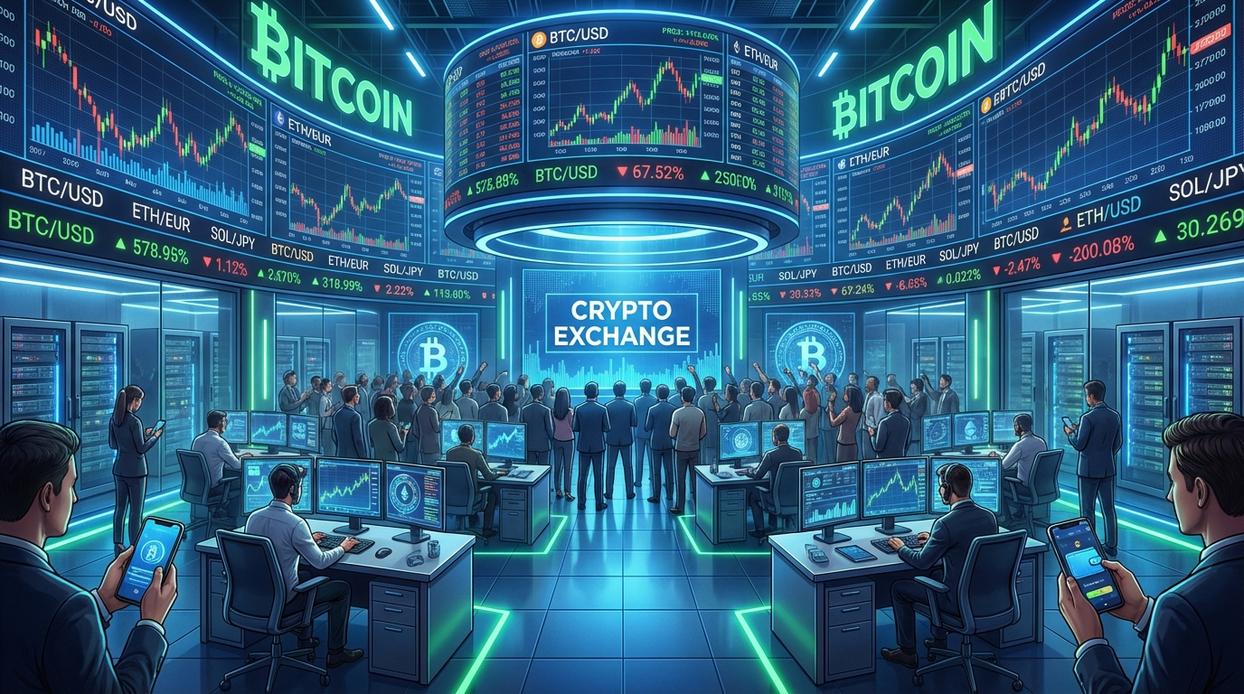
The interface looks complicated but it’s really just three parts.
You’ve got your price chart on the left. Those green and red bars? Candlesticks. They show you price movement over time. Green means the price went up during that period. Red means it dropped.
The order book sits in the middle. It’s a live feed of everyone trying to buy and sell. The red numbers are sell orders. Green numbers are buy orders. The closer these numbers are to each other, the tighter the spread.
Your trade execution panel is usually on the right. This is where you actually place orders.
That’s it. Once you know what each section does, the chaos starts making sense.
Understanding Order Types
Here’s where I screwed up that first day (and where most beginners mess up too).
Market Order I walk through this step by step in Growth Strategy Drhcryptology.
This buys or sells RIGHT NOW at whatever the current price is. Sounds simple. And it is. But here’s the catch I learned the hard way.
When you hit that market buy button, you don’t always get the price you see on screen. The order book might not have enough volume at that exact price. So your order “slips” to the next available price. Sometimes that’s fine. Sometimes it costs you.
I use market orders now but only for small amounts when speed matters more than price.
Limit Order
This is what you should use 90% of the time when you’re starting out.
With a limit order, you set the EXACT price you want. If you want to buy Bitcoin at $42,000 and not a penny more, you set a limit order at $42,000. The trade only happens if the price hits your number.
The downside? Your order might never fill if the price doesn’t reach your target. But at least you’re in control.
Stop-Limit Order
I didn’t understand these for months. Wish someone had explained them better.
A stop-limit protects you from big losses. You set two prices: a stop price and a limit price. When the market hits your stop price, it triggers a limit order at your limit price.
Say you buy Bitcoin at $45,000. You set a stop at $43,000 and a limit at $42,900. If Bitcoin drops to $43,000, your stop-limit order activates and tries to sell between $43,000 and $42,900. You’re out before things get worse. Understanding concepts like stop-limit orders is crucial for traders, and if you’re wondering, “How Do Crypto Charts Work Drhcryptology,” it’s essential to grasp how these tools can help you navigate market fluctuations effectively.
It’s not perfect. In a fast crash, the price might blow past your limit before you can sell. But it’s still better than watching your investment tank while you sleep.
Executing Your First Trade
Let me walk you through a real example. We’ll buy 0.01 BTC using USDT on binance exchange drhcryptology.
First, make sure you’ve got USDT in your spot wallet. If you don’t, you need to deposit or convert some funds first.
Go to the BTC/USDT trading pair. You’ll see the current Bitcoin price. Let’s say it’s sitting at $44,000.
Click on the limit order tab in your execution panel. Enter 0.01 in the amount field. That’s how much BTC you want to buy.
Now set your price. If you want to buy at the current market price, just click the price shown. Or set a lower price if you think Bitcoin might dip and you’re willing to wait.
The system will show you the total cost in USDT. For 0.01 BTC at $44,000, that’s $440 plus a small trading fee.
Double check everything. The amount. The price. The total.
Then hit the buy button.
Your order appears in the open orders section below. If you set a limit order below the current price, it’ll sit there until the market drops to your target. If you matched the current price, it should fill almost instantly.
Once it fills, you’ll see 0.01 BTC in your spot wallet.
That’s your first trade.
Some people will tell you to just use market orders because they’re faster. They’ll say limit orders are too complicated for beginners. But I’ve watched too many new traders lose money to slippage because they were in a hurry.
Take the extra ten seconds. Set a limit order. Know exactly what you’re paying.
If you’re still figuring out which crypto to buy for beginners drhcryptology, start with small amounts. Get comfortable with the mechanics before you put real money on the line.
The trading screen won’t feel overwhelming after your third or fourth trade. It just takes practice.
Beyond Spot Trading: What Else Can You Do on Binance?
Most people think Binance is just for buying and selling crypto.
They’re missing about 80% of what the platform actually offers.
I’m going to be straight with you. When I first started using Binance, I stuck to spot trading for months. Bought low, sold high (or tried to anyway). But then I realized I was leaving money on the table.
Binance Earn is where things get interesting.
You can park your crypto in Savings or Staking and watch it grow without doing anything. No charts to stare at. No timing the market. Just passive income while you sleep.
Is it risk-free? No. Nothing in crypto is. But it’s a hell of a lot less stressful than trying to catch every price swing.
Now, some traders will tell you that Binance Futures is where the real money is. And sure, if you know what you’re doing with leverage, you can make serious gains.
But here’s my take: Futures trading is not for beginners. Period. I’ve seen too many people blow up their accounts because they thought they were ready. The leverage works both ways, and it works fast.
Want to get in early on new projects?
Check out Binance Launchpad and Launchpool. These platforms give you access to tokens before they hit the main exchange. I’ve used both, and while not every project is a winner, getting in early can pay off big.
The binance exchange drhcryptology approach is simple. Don’t just trade. Build a strategy that uses multiple features to grow your portfolio.
Core Principles of Risk Management for Crypto Trading
You know what drives me crazy?
Watching traders blow up their accounts because they thought crypto was different. Like somehow the basic rules of risk management don’t apply here.
I see it all the time in the Bronx crypto community. Someone hears about a coin pumping and throws their rent money at it. Then acts shocked when it crashes 40% overnight.
Here’s the truth. Crypto is volatile as hell. That’s not news. But people still trade like they’re playing with Monopoly money.
The golden rule isn’t complicated. Never trade with money you can’t afford to lose completely. Not money you’d rather not lose. Money that if it vanished tomorrow, your life stays the same.
Because it can vanish. Fast.
Now here’s where most traders mess up even worse. They enter trades with zero plan. No exit strategy. No idea when they’re taking profits or cutting losses. They’re just winging it and hoping for the best (spoiler: hope isn’t a strategy). I expand on this with real examples in Cryptocurrencies Drhcryptology.
Before you click buy on Binance Exchange DRHCryptology or any platform, you need three numbers locked in. Your entry price. Your profit target. Your stop-loss level. Write them down if you have to.
This isn’t about being scared. It’s about not being stupid.
You want to know what kills more accounts than bad trades? FOMO and panic selling. You see everyone talking about how do crypto charts work drhcryptology but ignore the signals because you’re too busy chasing pumps. In the midst of chasing market pumps and falling victim to FOMO, many new traders overlook the essential question of “Which Crypto to Buy for Beginners Drhcryptology,” ultimately letting emotional trading decisions dictate their success.
A trading plan keeps you disciplined when your emotions are screaming at you to do something dumb.
Your Journey as a Binance Trader Begins Now
You came here feeling overwhelmed by Binance exchange.
I get it. The platform looks complicated when you first log in.
But now you have a roadmap. You know how to create a secure account and execute your first spot trade.
That confusion you felt? It’s gone. You’ve got the foundation you needed.
This step-by-step approach gives you confidence to begin. You’re not guessing anymore.
Here’s what you do next: Start with a small amount. Practice what you learned in this guide. Commit to learning as you go.
DRH Cryptology exists because crypto traders need clear information without the hype. You deserve straight answers about how these platforms actually work.
Your first trade is waiting. Take what you learned here and put it into action.
 Vynric Droshar writes the kind of crypto security practices content that people actually send to each other. Not because it's flashy or controversial, but because it's the sort of thing where you read it and immediately think of three people who need to see it. Vynric has a talent for identifying the questions that a lot of people have but haven't quite figured out how to articulate yet — and then answering them properly.
They covers a lot of ground: Crypto Security Practices, Blockchain Technology Insights, Crypto News and Developments, and plenty of adjacent territory that doesn't always get treated with the same seriousness. The consistency across all of it is a certain kind of respect for the reader. Vynric doesn't assume people are stupid, and they doesn't assume they know everything either. They writes for someone who is genuinely trying to figure something out — because that's usually who's actually reading. That assumption shapes everything from how they structures an explanation to how much background they includes before getting to the point.
Beyond the practical stuff, there's something in Vynric's writing that reflects a real investment in the subject — not performed enthusiasm, but the kind of sustained interest that produces insight over time. They has been paying attention to crypto security practices long enough that they notices things a more casual observer would miss. That depth shows up in the work in ways that are hard to fake.
Vynric Droshar writes the kind of crypto security practices content that people actually send to each other. Not because it's flashy or controversial, but because it's the sort of thing where you read it and immediately think of three people who need to see it. Vynric has a talent for identifying the questions that a lot of people have but haven't quite figured out how to articulate yet — and then answering them properly.
They covers a lot of ground: Crypto Security Practices, Blockchain Technology Insights, Crypto News and Developments, and plenty of adjacent territory that doesn't always get treated with the same seriousness. The consistency across all of it is a certain kind of respect for the reader. Vynric doesn't assume people are stupid, and they doesn't assume they know everything either. They writes for someone who is genuinely trying to figure something out — because that's usually who's actually reading. That assumption shapes everything from how they structures an explanation to how much background they includes before getting to the point.
Beyond the practical stuff, there's something in Vynric's writing that reflects a real investment in the subject — not performed enthusiasm, but the kind of sustained interest that produces insight over time. They has been paying attention to crypto security practices long enough that they notices things a more casual observer would miss. That depth shows up in the work in ways that are hard to fake.